How Different Hospital Departments Work Together to Treat Patients

Pawan Hospital
Introduction
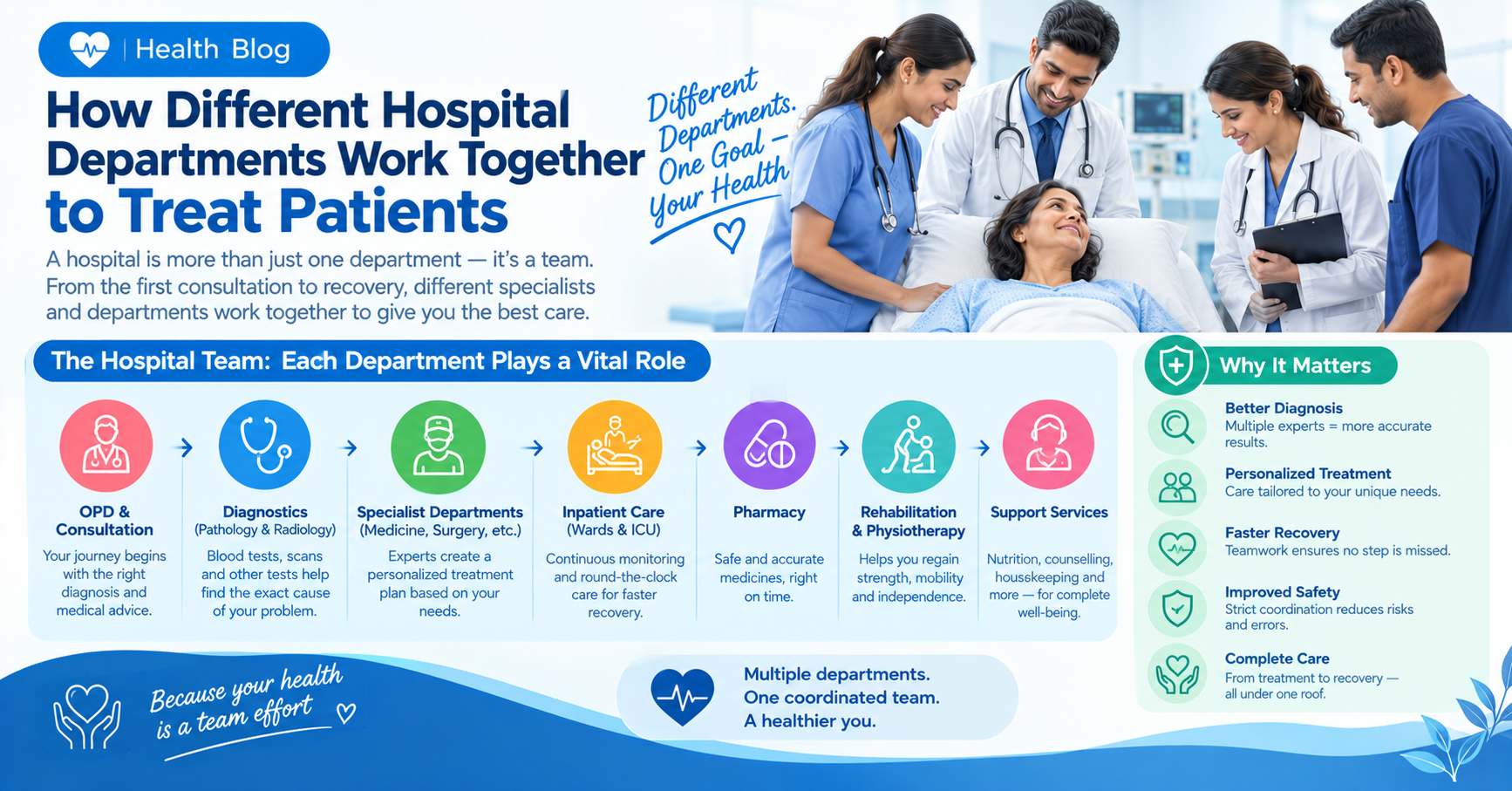
When a patient visits a hospital, receiving the right treatment often involves more than consulting a single doctor. Depending on the patient's symptoms and medical condition, different hospital departments may need to work together to assess the problem, confirm a diagnosis, recommend treatment, and monitor recovery.
For example, a patient experiencing persistent abdominal pain may first consult a general physician. The doctor may recommend diagnostic tests and refer the patient to a specialist if further evaluation is needed. If the condition requires surgery or hospital admission, additional medical professionals become involved in the patient's care.
This coordination is an important part of modern healthcare. At a multispecialty hospital, departments with different responsibilities work toward a common goal: providing appropriate, timely, and patient-focused medical care.
Understanding how hospital departments work together can help patients feel more confident about the treatment process and understand why consultations, diagnostic tests, specialist opinions, and follow-up appointments may all be necessary.
What Are Hospital Departments?
Hospital departments are specialized units responsible for different aspects of healthcare. Each department has a specific role, but its work often connects with the responsibilities of other departments.
The Outpatient Department (OPD), for instance, provides consultations for patients who do not necessarily require admission. Diagnostic services help doctors investigate symptoms, while inpatient services support patients who need hospital admission, observation, or ongoing treatment. Surgical and gynecological departments manage conditions requiring their respective specialist expertise.
In a multispecialty hospital, these departments can help coordinate different stages of treatment. The exact services available vary from one hospital to another, depending on its facilities, staff, and clinical capabilities.
1. Outpatient Department: The First Step in Patient Care
The Outpatient Department is often the first point of contact for patients seeking medical advice. Patients visit the OPD for symptoms such as fever, weakness, abdominal discomfort, headaches, persistent coughing, or other health concerns.
During a consultation, the doctor reviews the patient's symptoms, medical history, existing medications, and relevant lifestyle factors. A physical examination may also be performed to understand the possible cause of the problem.
Based on the findings, the doctor may prescribe medication, recommend lifestyle changes, order diagnostic tests, or refer the patient to a specialist. If the condition requires closer monitoring or hospital admission, the patient may be directed to the appropriate service.
The OPD therefore plays an important role in identifying health concerns and guiding patients toward the next stage of care.
2. Diagnostic Services: Helping Doctors Identify the Problem
Diagnostic services help doctors understand what may be causing a patient's symptoms. Depending on the suspected condition, investigations may include laboratory tests, imaging, ultrasound, or other appropriate diagnostic procedures.
For example, a patient with persistent abdominal pain may require blood tests or an ultrasound examination. A patient with suspected diabetes may need blood glucose testing, while a patient experiencing certain urinary symptoms may require urine investigations.
The results provide additional information that helps the treating doctor assess the condition and decide what to do next. Sometimes the results confirm the initial diagnosis; in other cases, further testing or specialist assessment may be required.
Communication between the treating doctor and the diagnostic team is important because test results need to be interpreted alongside the patient's symptoms and medical history. A test result alone does not always provide the complete picture.
3. General Medicine: Managing Common Health Conditions
General medicine and physician consultations help assess a wide range of health concerns. General physicians commonly evaluate conditions such as fever, infections, diabetes, high blood pressure, digestive complaints, and other medical problems within their scope of practice.
When a patient arrives with symptoms that could have several possible causes, a physician can assess the overall health picture and determine which investigations or treatments are appropriate.
If a condition requires more specialized care, the physician may refer the patient to another department. For example, a patient with persistent digestive symptoms may need a surgical or gastroenterology assessment, depending on the findings and available services.
General medicine can also help coordinate care for patients who have several health conditions at the same time. This broader perspective is especially valuable when treatment decisions need to account for existing illnesses and medications.
4. Specialist Departments: Providing Focused Medical Expertise
Some medical conditions require expertise beyond an initial consultation. Specialist doctors evaluate specific health concerns and recommend treatment based on the patient's diagnosis, symptoms, and overall condition.
For example, a gynecologist assesses reproductive and women's health concerns, while a surgeon evaluates conditions that may require an operation. Other specialist services may focus on heart health, kidney conditions, respiratory problems, or neurological disorders.
Specialist involvement does not always mean that a patient needs surgery or advanced treatment. In many cases, a specialist can recommend medication, monitoring, lifestyle adjustments, or further investigations.
The referral process helps patients reach the appropriate professional when additional expertise is needed. Sharing relevant medical history, previous test results, and current medication details can make these consultations more useful and reduce unnecessary repetition.
5. Inpatient Department: Supporting Patients Who Need Admission
Not every medical condition can be managed through outpatient consultations. Some patients need hospital admission for observation, treatment, procedures, or recovery after surgery.
The Inpatient Department supports patients who remain in the hospital under medical supervision. The treating team monitors symptoms, reviews investigation results, administers prescribed treatment, and assesses whether the patient is improving.
Depending on the patient's needs, care may involve doctors, nursing staff, diagnostic professionals, and other healthcare workers. They share relevant updates and respond to changes in the patient's condition.
For example, a patient admitted with a significant infection may require medication, monitoring, laboratory investigations, and repeated clinical assessments. The treatment plan may be adjusted as the team receives new information.
The purpose of inpatient care is to provide the level of monitoring and treatment needed for the patient's condition until discharge or transfer to another appropriate service.
6. Surgical Services: When a Condition Requires an Operation
Some medical conditions require a surgical procedure rather than medication alone. Surgical teams assess the patient, review diagnostic findings, explain available options, and determine whether an operation is appropriate.
Surgical care frequently involves collaboration with other hospital services. Before a procedure, the patient may require laboratory tests, imaging, an assessment of existing medical conditions, and an evaluation of anesthesia-related risks where applicable.
After surgery, the treating team monitors recovery, manages pain, checks for possible complications, and advises the patient about wound care, activity, medication, and follow-up appointments.
Not every patient with a surgical condition needs an immediate operation. The timing and type of treatment depend on the diagnosis, urgency, and individual circumstances.
Clear communication between the surgical team and other healthcare professionals helps ensure that important information is considered before and after a procedure.
7. Gynecology and Obstetrics: Coordinated Care for Women's Health
Gynecology and obstetrics services support women through different stages of reproductive and maternal healthcare. These services may include evaluation of menstrual concerns, pregnancy monitoring, childbirth care, and treatment of certain reproductive health conditions.
Pregnancy care is a good example of how departments can work together. A pregnant woman may need consultations, blood tests, ultrasound examinations, and assessments of maternal health. If a complication develops, the care plan may require additional specialist input or hospital admission.
During childbirth, doctors and nursing professionals monitor the mother and baby and respond to changing clinical needs. When a cesarean delivery or another procedure is required, surgical and anesthesia teams may become involved according to the hospital's facilities and clinical arrangements.
After delivery, follow-up care helps monitor recovery and identify concerns that may need medical attention.
Coordinated women's healthcare can support continuity of care from routine consultations through pregnancy, delivery, and recovery.
8. Emergency Services: Responding to Urgent Medical Needs
Emergency care is important when a patient has a serious injury, severe breathing difficulty, significant bleeding, suspected stroke, severe chest pain, or another potentially life-threatening condition.
The initial priority is to assess the patient's condition and provide urgent stabilization. Depending on the problem, the emergency team may need diagnostic tests, medical treatment, specialist evaluation, or surgical intervention.
For example, a patient with severe abdominal pain may require an immediate clinical assessment and urgent investigations. The results help the medical team determine whether the patient needs medication, observation, specialist care, or surgery.
In emergencies, coordination is particularly important because delays can affect outcomes. Patients should seek emergency medical attention when symptoms are severe or rapidly worsening rather than waiting for a routine appointment.
The specific emergency services and specialist support available depend on the hospital's facilities and staffing.
9. Nursing Staff: Connecting Different Stages of Care
Doctors play a central role in diagnosis and treatment decisions, but nursing professionals are equally important in delivering day-to-day patient care.
Nurses monitor vital signs, administer prescribed medication, assist with procedures, observe changes in symptoms, and communicate relevant information to the treating team. They also help patients understand care instructions and prepare for discharge.
Because nursing staff often spend significant time with patients, they may notice changes that require medical review. Sharing these observations promptly can help the team respond appropriately.
Nurses also support communication with family members, explain routine care processes, and reinforce instructions about medication, wound care, nutrition, and follow-up.
Their role helps connect the treatment plan with the patient's daily experience inside the hospital.
10. How Departments Work Together: A Patient Care Example
Consider a patient who visits a hospital with persistent abdominal pain.
The process may begin with an OPD consultation, during which the doctor reviews the symptoms and performs an examination. The doctor may recommend blood tests or imaging to investigate possible causes.
Once the results are available, the treating doctor reviews them alongside the patient's condition. If a specialist assessment is required, the patient may be referred to the appropriate department. If the condition needs admission, the inpatient team can support continued observation and treatment.
If surgery becomes necessary, the surgical team evaluates the patient and coordinates the relevant preoperative assessments. Following the procedure, the team monitors recovery and provides discharge instructions when the patient is ready to leave the hospital.
The patient may then return for a follow-up appointment to review recovery and address any continuing concerns.
This example illustrates how different departments contribute at different stages. The exact pathway varies according to the diagnosis and the patient's needs, and not every patient requires every department.
Benefits of Coordination Between Hospital Departments
More informed treatment decisions
When relevant clinical information and test results are shared appropriately, doctors can make decisions based on a broader understanding of the patient's condition. Specialist input may also help clarify complex diagnoses or treatment options.
Better continuity of care
Patients may move between consultations, investigations, admission, procedures, and follow-up appointments. Coordinating these stages helps maintain a clear treatment plan and reduces the risk of important information being missed.
Reduced unnecessary delays
Effective communication can help the treating team identify which investigations or consultations are needed next. This does not mean every test or referral can happen immediately, but clear coordination can make the process more organized.
Improved patient understanding
When healthcare professionals explain the purpose of tests, referrals, and treatment changes, patients can better understand their care. Clear instructions also help patients know what to expect after discharge and when to seek further medical advice.
Greater attention to patient safety
Sharing medication details, allergies, investigation findings, and changes in symptoms helps the team identify potential risks. Patients can contribute by providing accurate medical histories and informing staff about any changes in their condition.
How Patients Can Help Their Healthcare Team
Patients also have an important role in making coordinated care effective. Providing a complete medical history, listing current medicines, and mentioning allergies can help doctors assess treatment options more accurately.
It is useful to bring previous investigation reports and discharge summaries to appointments, particularly when consulting a new doctor or specialist. Patients should also ask questions if they do not understand why a test has been recommended, what a diagnosis means, or how to take prescribed medication.
Before leaving the hospital, patients should understand their medication schedule, any restrictions on daily activities, warning signs that require medical attention, and the date or timing of follow-up care.
If symptoms worsen or new concerning symptoms develop, patients should contact a healthcare professional or seek urgent care as appropriate.
Choosing a Multispecialty Hospital in Jaipur
When selecting a hospital, patients may want to consider the availability of relevant departments, qualified healthcare professionals, diagnostic facilities, emergency arrangements, and access to follow-up care.
A multispecialty hospital can be helpful when a patient's condition requires assessment by more than one medical discipline. However, the right choice depends on the patient's specific needs and whether the required service is available at that facility.
For people searching for a multispecialty hospital in Jaipur or a hospital in Amer Road Jaipur, it is worth checking the hospital's official service information and confirming which departments and facilities are available for the condition in question.
Patients should also ask about appointment timings, necessary reports, referral requirements, and emergency arrangements before visiting when the situation is not urgent.
Patient Care at Pawan Hospital Jaipur
Pawan Hospital is a multispecialty hospital located at 27, Govindpuri East, New Ramgarh Mode, Amer Road, Jaipur, Rajasthan 302002. Its website lists services including the Outpatient Department, Diagnostic Services, Inpatient Department, Operative Services, and Gynecology & Obstetrics.
These services support different aspects of patient care, from medical consultations and investigations to inpatient management and women's healthcare. The appropriate service depends on the patient's symptoms and the clinical assessment.
People looking for a hospital in Amer Road Jaipur, a multispecialty hospital in Jaipur, or medical consultations in the area can review the hospital's official website for service details, contact information, and OPD timings.
Website: https://pawanhospital.co.in/
Conclusion
Effective healthcare depends on more than an individual consultation or a single medical procedure. Hospital departments work together to assess symptoms, investigate possible causes, provide specialist expertise, manage treatment, and support recovery.
The Outpatient Department helps guide the initial assessment, diagnostic services provide important clinical information, specialist teams manage specific conditions, and inpatient or surgical services support patients who need more intensive care. Nursing professionals and other healthcare staff help maintain continuity throughout the process.
When communication and coordination are effective, patients can receive more organized, informed, and consistent care. Understanding these roles can help patients participate more confidently in their healthcare decisions and follow their treatment plans.
For people seeking a multispecialty hospital in Jaipur, choosing a facility with appropriate services and clear care pathways can be an important step toward managing health concerns effectively.
Pawan Hospital
Author