Asthma vs COPD: How Are the Symptoms Different?

Pawan Hospital
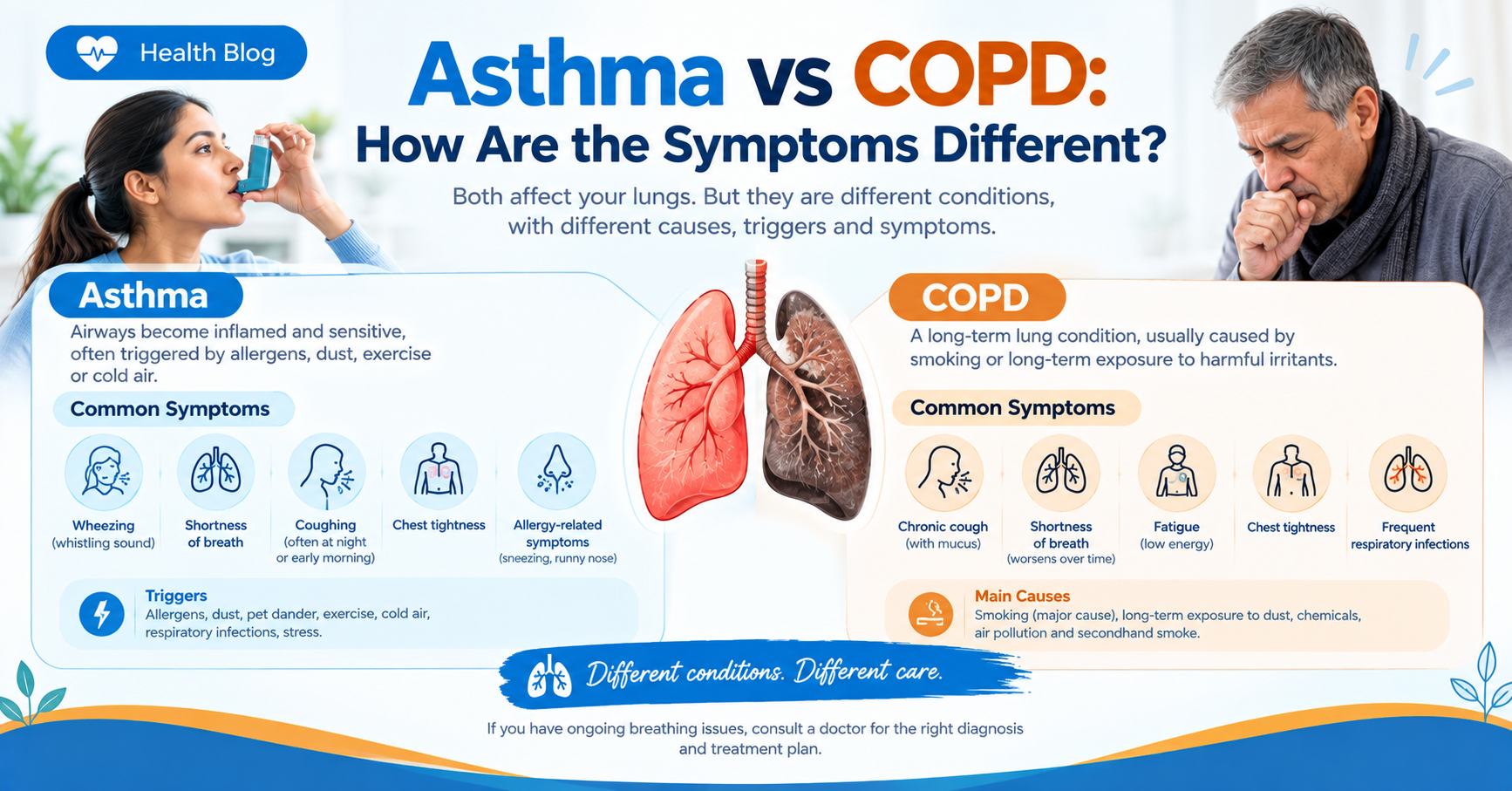
Asthma and chronic obstructive pulmonary disease (COPD) are two common respiratory conditions that can make breathing difficult. Because both conditions may cause symptoms such as coughing, wheezing, chest tightness, and shortness of breath, it can sometimes be difficult to understand how they are different.
However, asthma and COPD are not the same disease. They have different causes, patterns of symptoms, risk factors, and approaches to treatment. Asthma can often begin during childhood or early adulthood, although it can develop at any age. COPD is more commonly diagnosed in adults, particularly those with a history of long-term exposure to cigarette smoke or other lung irritants.
Understanding the differences can help people recognise persistent respiratory symptoms and seek appropriate medical evaluation.
What Is Asthma?
Asthma is a chronic condition that affects the airways, the tubes that carry air into and out of the lungs. In people with asthma, the airways can become inflamed and overly sensitive.
When exposed to certain triggers, the muscles around the airways may tighten, the airway lining can swell, and mucus production may increase. Together, these changes can make it harder for air to move through the airways.
Asthma symptoms can vary considerably from one person to another. Some people experience symptoms only occasionally, while others may have more frequent symptoms that require regular treatment.
Common asthma symptoms include wheezing, coughing, shortness of breath, and chest tightness.
What Is COPD?
COPD is a group of chronic lung diseases that cause persistent airflow limitation and breathing difficulties. The two main conditions commonly associated with COPD are emphysema and chronic bronchitis.
COPD usually develops gradually over time. Long-term exposure to cigarette smoke is one of the major risk factors, but exposure to second-hand smoke, air pollution, occupational dust, fumes, and certain other irritants can also contribute.
Unlike the symptoms of asthma, which can vary significantly and may come and go, COPD commonly causes persistent respiratory symptoms that can gradually worsen over time.
Asthma vs COPD: The Main Difference
One of the most useful ways to distinguish asthma from COPD is to look at the pattern of symptoms and airflow limitation.
Asthma symptoms often vary over time and may be triggered by allergens, exercise, respiratory infections, cold air, smoke, or other irritants. Between episodes, some people with asthma may have few or no symptoms.
COPD symptoms tend to be more persistent. A person may experience chronic cough, mucus production, and shortness of breath during physical activity. Symptoms can become worse during periods called exacerbations or flare-ups.
However, symptoms alone cannot always distinguish asthma from COPD. A doctor may need to perform lung function testing and consider the person's medical history.
Asthma Symptoms
Asthma symptoms can occur intermittently or regularly, depending on the severity and control of the condition.
Wheezing
Wheezing is a common asthma symptom. It is often described as a whistling or musical sound when breathing, particularly while breathing out.
Wheezing can become more noticeable during an asthma flare-up, although not everyone with asthma experiences it.
Shortness of Breath
People with asthma may feel that they cannot get enough air or that breathing requires more effort.
Shortness of breath may appear after exposure to a trigger, during exercise, at night, or during an asthma attack.
Chest Tightness
Some people describe asthma as a feeling of pressure, tightness, or heaviness in the chest. This sensation may occur along with wheezing or difficulty breathing.
Cough
Asthma can cause a dry or persistent cough. For some people, coughing may be the main symptom, particularly at night or early in the morning.
Asthma-related coughing can also become worse with exercise, cold air, allergens, or respiratory infections.
COPD Symptoms
COPD symptoms usually develop gradually, and people may initially mistake them for normal effects of ageing or being out of shape.
Persistent Cough
A long-lasting cough is one of the common symptoms associated with COPD. It may be accompanied by mucus or phlegm, particularly in people with chronic bronchitis.
A persistent cough should not simply be dismissed as a normal consequence of smoking or ageing.
Shortness of Breath
Shortness of breath is another major symptom of COPD. It may initially occur only during activities such as walking quickly, climbing stairs, or exercising.
As COPD progresses, some people may experience breathlessness during routine daily activities or even while resting.
Mucus or Phlegm
People with COPD may produce mucus regularly. Persistent mucus production, especially when associated with a chronic cough and breathing difficulty, should be evaluated by a healthcare professional.
Frequent Chest Infections
People with COPD may experience repeated respiratory infections or worsening respiratory symptoms during infections.
These episodes can cause increased coughing, mucus production, wheezing, and shortness of breath.
Asthma vs COPD: How the Symptoms Differ
Although there is some overlap, the symptom pattern can provide useful clues.
Asthma symptoms often vary from day to day and may be triggered by specific factors. A person may experience symptoms after exposure to dust, pollen, smoke, cold air, exercise, or certain allergens and then feel relatively well at other times.
COPD symptoms are generally more persistent. Chronic cough, mucus production, and breathlessness may gradually become more noticeable over time.
Asthma can also occur at night or in the early morning, while COPD-related breathlessness often becomes more apparent during physical activity.
However, these patterns are not absolute. Some people can have features of both conditions, which is why proper medical assessment is important.
What Causes Asthma?
Asthma does not have one single cause. A combination of genetic and environmental factors can contribute to its development.
Common asthma triggers include pollen, dust mites, mould, pet allergens, smoke, air pollution, respiratory infections, cold air, exercise, and certain chemicals or medications.
Not everyone with asthma has the same triggers. Identifying individual triggers can help people reduce exposure and manage their symptoms.
What Causes COPD?
The most important risk factor for COPD is long-term exposure to tobacco smoke. However, COPD can also develop in people who have never smoked.
Long-term exposure to air pollution, workplace dust and chemical fumes, and second-hand smoke can increase the risk.
In rare cases, a genetic condition called alpha-1 antitrypsin deficiency can contribute to COPD, particularly when it occurs at a younger age.
Can a Smoker Have Asthma?
Yes. Smoking does not mean that a person automatically has COPD. A person can have asthma and also smoke, although smoking can irritate the airways and make respiratory symptoms more difficult to control.
Smoking also increases the risk of developing COPD and other serious health conditions.
If someone with asthma smokes, quitting is an important step toward protecting lung health and improving overall respiratory health.
Can a Person Have Both Asthma and COPD?
Yes. Some people may have features of both asthma and COPD. This is sometimes described as asthma-COPD overlap.
The distinction can be important because treatment needs to be tailored to the individual's symptoms, lung function, medical history, and other risk factors.
If a person has persistent breathing problems or symptoms that do not respond as expected to treatment, a doctor may recommend further testing.
How Are Asthma and COPD Diagnosed?
Symptoms alone are not enough to accurately diagnose asthma or COPD.
A doctor will usually ask about symptoms, their timing, possible triggers, smoking history, occupational exposure, allergies, previous respiratory problems, and family history.
Spirometry, a type of pulmonary function test, is an important tool used to assess how well the lungs are working. It measures how much air a person can breathe out and how quickly they can do so.
Depending on the symptoms and clinical situation, doctors may recommend additional tests such as chest imaging, blood tests, allergy testing, or other lung function tests.
A proper diagnosis helps ensure that the treatment is appropriate for the condition.
How Is Asthma Treated?
Asthma treatment focuses on controlling airway inflammation, reducing symptoms, and preventing flare-ups.
Depending on the severity of asthma, treatment may include inhaled medicines that reduce airway inflammation and medicines that relax the airway muscles.
Some people need regular controller medication, while others may use specific medicines for symptom relief according to their doctor's treatment plan.
Identifying and avoiding individual triggers can also help reduce symptoms.
Asthma treatment should be personalised. Patients should not start, stop, or change inhaled medicines without discussing it with their healthcare professional.
How Is COPD Treated?
COPD cannot usually be cured, but appropriate treatment can help control symptoms, improve quality of life, and reduce the risk of exacerbations.
Treatment may include inhaled medicines that help open the airways, pulmonary rehabilitation, physical activity, vaccinations, oxygen therapy for selected patients, and other measures depending on the severity of the disease.
For people who smoke, stopping smoking is one of the most important steps for slowing further lung damage.
The treatment plan depends on the severity of COPD and the patient's individual health needs.
Can Asthma and COPD Be Prevented?
Not all cases can be prevented, but certain measures can reduce the risk or help control respiratory disease.
Avoiding cigarette smoke is particularly important. People who smoke should consider quitting, while non-smokers should avoid exposure to second-hand smoke whenever possible.
Reducing exposure to occupational dust, chemical fumes, and significant air pollution can also help protect the lungs.
People with asthma can work with their doctor to identify personal triggers and follow their prescribed treatment plan.
When Should You See a Doctor?
Occasional breathlessness after intense exercise may not necessarily indicate lung disease. However, repeated or unexplained breathing problems should not be ignored.
You should consider consulting a doctor if you have a persistent cough, recurring wheezing, frequent chest infections, unexplained shortness of breath, chest tightness, or a noticeable reduction in your ability to perform normal physical activities.
People who smoke or have a history of long-term exposure to dust, fumes, or air pollution should be particularly attentive to persistent respiratory symptoms.
When Is Breathing Difficulty an Emergency?
Severe breathing difficulty can require immediate medical attention.
Seek emergency care if you are struggling to breathe, cannot speak normally because of breathlessness, develop severe chest pain, experience bluish or grey lips or skin, become confused, or have rapidly worsening respiratory symptoms.
People with known asthma should follow their prescribed asthma action plan during an attack and seek emergency care if symptoms are severe or are not improving with their prescribed reliever treatment.
Asthma and COPD in Older Adults
COPD becomes more common with increasing age, particularly among people with a long history of smoking or exposure to lung irritants.
Asthma, however, can occur at any age, including later in life. Asthma that develops in adulthood can sometimes be confused with COPD because the symptoms may overlap.
For older adults with persistent cough or breathlessness, proper lung function testing can help doctors determine the underlying cause.
Why Early Diagnosis Matters
Persistent respiratory symptoms should not be considered a normal part of ageing.
Early diagnosis can help identify the cause of breathing difficulties and allow appropriate treatment to begin. For asthma, good control can help reduce symptoms and prevent attacks. For COPD, appropriate management can help reduce symptoms, improve exercise tolerance, and lower the risk of exacerbations.
A medical evaluation is particularly important when symptoms are gradually getting worse or interfering with everyday activities.
Respiratory Care at Pawan Hospital Jaipur
People experiencing persistent cough, wheezing, breathing difficulty, or other respiratory symptoms can consult a healthcare professional for proper evaluation.
For those searching for a hospital in Amer Road Jaipur, respiratory care in Jaipur, or a multispecialty hospital in Jaipur, Pawan Hospital provides outpatient, diagnostic, inpatient, operative, and emergency services.
Pawan Hospital is located at 27, Govindpuri East, New Ramgarh Mode, Amer Road, Jaipur, Rajasthan 302002. Its 24-hour emergency services can also provide support when serious symptoms require immediate medical attention.
Pawan Hospital Jaipur
Pawan Hospital is a multispecialty hospital in Jaipur providing medical services across different healthcare needs.
Patients with persistent respiratory symptoms can seek medical evaluation to understand whether their symptoms may be related to asthma, COPD, an infection, allergies, or another condition.
For patients searching for an Asthma Doctor in Jaipur, COPD Treatment in Jaipur, Chest Specialist in Jaipur, or a hospital in Amer Road Jaipur, timely consultation can help identify the underlying cause and guide appropriate treatment.
Conclusion
Asthma and COPD can look similar because both may cause coughing, wheezing, chest tightness, and shortness of breath. However, their causes and typical symptom patterns are different.
Asthma symptoms often vary and may be triggered by allergens, exercise, infections, cold air, smoke, or other factors. COPD is more commonly associated with persistent respiratory symptoms that gradually develop over time, particularly in people with long-term exposure to tobacco smoke or other lung irritants.
Because symptoms can overlap and some people may have features of both conditions, it is important not to self-diagnose. Lung function testing and a detailed medical assessment can help determine the cause of breathing difficulties.
If you have persistent cough, wheezing, shortness of breath, or repeated chest infections, consult a healthcare professional rather than assuming the symptoms are simply due to age, weather, or smoking.
Pawan Hospital
Author