Fatty Liver Grades Explained: Grade 1, Grade 2 and Grade 3
Pawan Hospital
Introduction
Fatty liver is a common condition in which excess fat accumulates in the liver. In many people, it may not cause noticeable symptoms in the early stages and may be discovered during a routine health checkup, blood tests, or an ultrasound examination.
When an ultrasound report mentions Grade 1, Grade 2, or Grade 3 fatty liver, many people become concerned about what these grades actually mean. The grading generally describes the amount or appearance of fat accumulation seen in the liver on imaging. However, the grade alone does not tell the complete story about liver health.
Fatty liver can range from a condition with little immediate impact to a disease associated with inflammation, scarring, and an increased risk of liver complications. This is why understanding the grade, identifying the underlying cause, and getting appropriate medical advice are important.
What Is Fatty Liver?
The liver performs many important functions, including processing nutrients, producing certain proteins, helping with digestion, and processing substances in the blood.
Fatty liver occurs when excess fat builds up in liver cells. There are different types of fatty liver disease. Metabolic dysfunction-associated steatotic liver disease, or MASLD, is a common form associated with metabolic factors such as overweight or obesity, type 2 diabetes, and abnormal blood fats.
Alcohol consumption can also contribute to liver fat accumulation and liver disease. The cause of fatty liver therefore needs to be considered when evaluating a patient.
Having fat in the liver does not automatically mean that a person has severe liver damage. However, some people can develop inflammation and liver scarring over time, so proper evaluation is important.
What Do Grade 1, Grade 2 and Grade 3 Fatty Liver Mean?
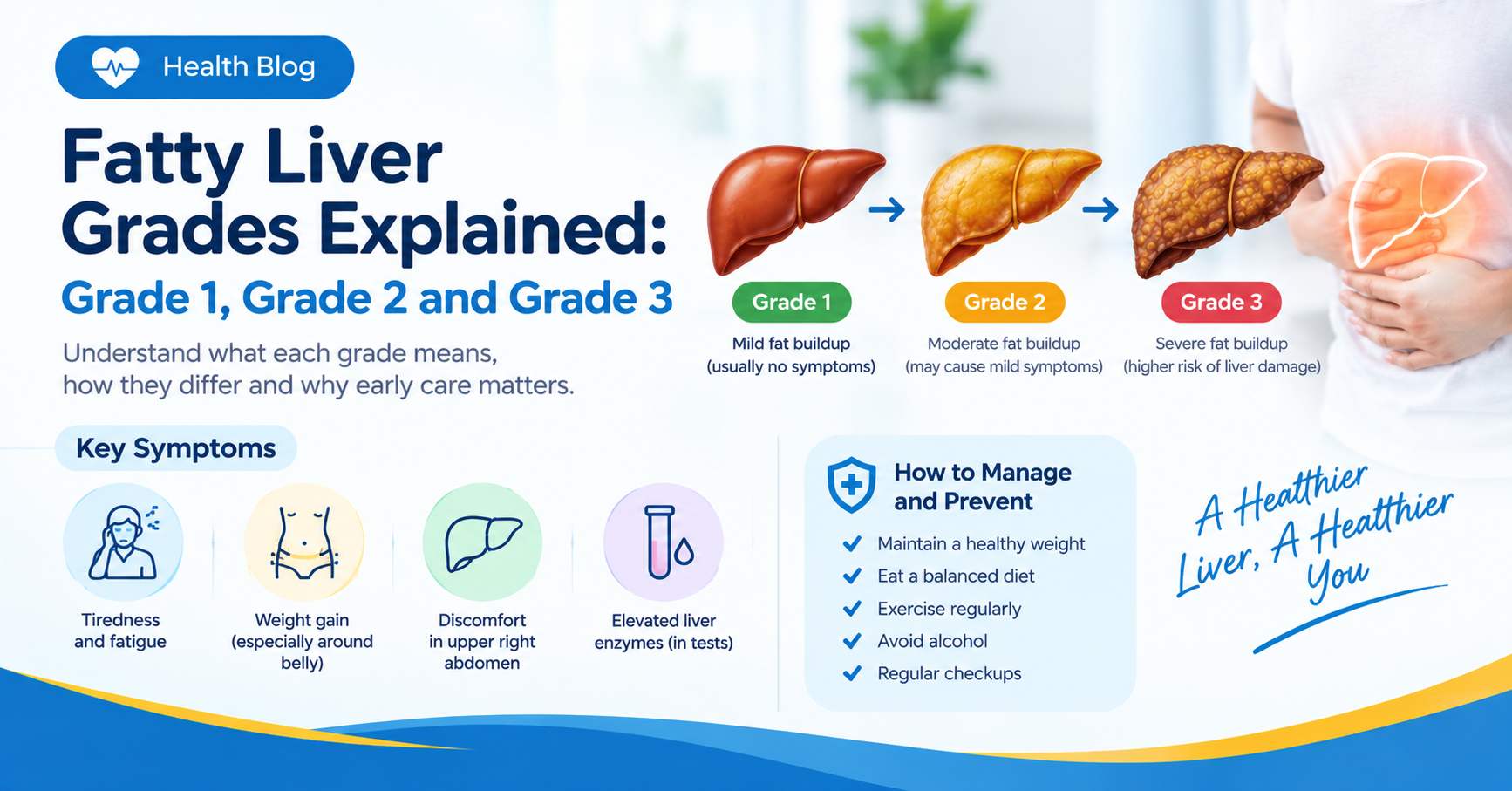
Fatty liver grading is commonly reported on ultrasound as Grade 1, Grade 2, or Grade 3. These grades broadly describe the increasing appearance of fat accumulation in the liver.
It is important to understand that ultrasound grading is not the same as staging liver fibrosis or permanent liver damage. A person with Grade 1 fatty liver does not necessarily have a completely healthy liver, and a person with Grade 3 does not automatically have cirrhosis.
Doctors may use additional blood tests, imaging, or other assessments to understand the overall condition of the liver.
Grade 1 Fatty Liver
Grade 1 fatty liver is generally considered the mildest ultrasound grade. The liver may show a mild increase in echogenicity, which means it appears brighter on the ultrasound because of increased fat.
Many people with Grade 1 fatty liver do not experience noticeable symptoms. It is often discovered incidentally when an ultrasound is performed for another reason or during a routine health evaluation.
Although Grade 1 is considered mild, it should not simply be ignored. Fatty liver can be associated with metabolic conditions such as obesity, diabetes, high cholesterol, and high blood pressure.
Lifestyle changes can be an important part of managing fatty liver, particularly when excess weight, unhealthy dietary patterns, or physical inactivity are contributing factors.
Can Grade 1 Fatty Liver Be Reversed?
In many people, improving the underlying metabolic risk factors can reduce liver fat. Weight management, regular physical activity, healthier food choices, and appropriate management of conditions such as diabetes and high cholesterol may help improve liver health.
However, the appropriate approach depends on the individual's health, medical history, and the underlying cause of fatty liver.
It is better to think of Grade 1 fatty liver as an opportunity to address the factors contributing to liver fat rather than waiting for the condition to become more advanced.
Grade 2 Fatty Liver
Grade 2 fatty liver indicates a greater degree of fat accumulation on ultrasound compared with Grade 1. The liver may appear more prominently bright, and certain structures within the liver may become less clearly visible.
People with Grade 2 fatty liver may still have few or no symptoms. Some may experience tiredness or vague discomfort in the upper right side of the abdomen, but these symptoms are not specific to fatty liver and may have other causes.
Grade 2 fatty liver deserves medical attention because the presence of more liver fat may be associated with a higher risk of liver inflammation and fibrosis in some people. However, the ultrasound grade alone cannot determine whether significant fibrosis is present.
Doctors may therefore consider other factors, including blood test results, metabolic health, medical history, and additional liver assessment when appropriate.
Grade 3 Fatty Liver
Grade 3 fatty liver generally represents the most marked degree of fatty change visible on ultrasound. The liver may appear significantly brighter, and deeper structures may become difficult to see clearly.
Grade 3 fatty liver should be evaluated by a healthcare professional because more severe steatosis can occur alongside other liver problems. However, it is important not to assume that Grade 3 fatty liver automatically means cirrhosis or permanent liver failure.
Further assessment may be needed to determine whether inflammation or fibrosis is present and whether the liver has sustained significant damage.
The goal of evaluation is not simply to identify the grade but to understand the overall condition of the liver and address the factors that may be contributing to the disease.
Grade 1 vs Grade 2 vs Grade 3 Fatty Liver
The three grades can be understood as a description of increasing fatty appearance on ultrasound.
Grade 1 generally indicates mild fatty change.
Grade 2 indicates a greater degree of fatty change, with more noticeable changes on ultrasound.
Grade 3 indicates a marked degree of fatty change, with significant alteration in the ultrasound appearance of the liver.
However, the grade does not by itself determine the amount of fibrosis or permanent liver damage. Two people with the same ultrasound grade can have different levels of liver inflammation or fibrosis.
This is why medical assessment should consider the whole clinical picture rather than focusing only on the ultrasound grade.
What Causes Fatty Liver?
Fatty liver can develop for several reasons. In many people, it is associated with metabolic health.
Being overweight or obese, especially having excess abdominal fat, can increase the risk. Type 2 diabetes, insulin resistance, high triglycerides, and other metabolic abnormalities are also associated with fatty liver.
Alcohol consumption can cause another form of fatty liver disease. Certain medicines and some medical conditions can also contribute to fat accumulation in the liver.
Because the causes can differ between individuals, identifying the underlying factors is an important part of treatment.
What Are the Symptoms of Fatty Liver?
Fatty liver often causes no obvious symptoms, particularly in its earlier stages. This is one reason why it may be discovered unexpectedly during an ultrasound or routine medical evaluation.
Some people may experience tiredness or discomfort in the upper right area of the abdomen. However, these symptoms are not specific to fatty liver and can occur with several other conditions.
More advanced liver disease can cause symptoms such as yellowing of the skin or eyes, swelling in the abdomen or legs, easy bruising, confusion, or significant weakness. These symptoms require medical evaluation.
How Is Fatty Liver Diagnosed?
Fatty liver may be suspected based on medical history, physical examination, blood tests, or imaging.
An ultrasound is commonly used to identify fatty changes in the liver. It can provide an indication of the amount of fat visible in the liver, which is why reports may describe Grade 1, Grade 2, or Grade 3 fatty liver.
Blood tests may be used to evaluate liver enzymes and other aspects of health. Doctors may also assess blood sugar, cholesterol, triglycerides, weight, blood pressure, and other metabolic risk factors.
When there is concern about liver fibrosis or more advanced disease, additional tests may be recommended. Depending on the situation, these can include non-invasive fibrosis assessment or specialised imaging.
Does Fatty Liver Mean Liver Damage?
Not necessarily.
Fat accumulation in the liver does not automatically mean that the liver has permanent damage. However, some people with fatty liver can develop inflammation and fibrosis over time.
Persistent inflammation can lead to increasing amounts of scar tissue. Advanced fibrosis can eventually progress to cirrhosis in some patients.
This is why fatty liver should be taken seriously even when a person feels completely well.
Can Fatty Liver Progress to Cirrhosis?
In some people, fatty liver disease can progress from simple fat accumulation to inflammation and fibrosis, and advanced fibrosis can eventually lead to cirrhosis.
However, this does not happen to everyone with fatty liver.
The risk of progression depends on several factors, including metabolic health, diabetes, obesity, alcohol consumption, genetics, and the presence of liver inflammation or fibrosis.
Identifying risk factors early and following appropriate medical advice can help manage the condition and reduce the risk of progression.
Can Fatty Liver Be Reversed?
Fatty liver can often improve when the factors contributing to liver fat are addressed.
For people who are overweight, gradual and sustained weight loss can reduce liver fat and may improve liver health. Regular physical activity, a balanced diet, and appropriate management of diabetes, cholesterol, and blood pressure are also important.
Rapid or extreme dieting is generally not the goal. Sustainable lifestyle changes are more practical for long-term health.
People who drink alcohol should discuss their alcohol intake with their healthcare provider, particularly if they have been diagnosed with liver disease.
What Should You Eat With Fatty Liver?
There is no single food that can cure fatty liver. Instead, the overall quality of the diet matters.
A balanced diet can include vegetables, fruits in appropriate portions, whole grains, legumes, nuts, seeds, and suitable sources of protein. Reducing highly processed foods, excessive sugar, and foods high in saturated fats can be beneficial for overall metabolic health.
Sugary beverages and excessive intake of refined carbohydrates can contribute to excess calorie intake and metabolic problems, so reducing them may be helpful.
Dietary recommendations should be personalised, particularly for people who have diabetes, high cholesterol, obesity, or other medical conditions.
Does Exercise Help With Fatty Liver?
Yes. Regular physical activity can support metabolic health and may help reduce liver fat.
Exercise does not necessarily have to involve intense workouts. Activities such as brisk walking, cycling, swimming, strength training, or other forms of regular physical activity can contribute to better overall health.
The most important factor is consistency. People who have been inactive should choose an activity level that is appropriate for their health and gradually increase it as tolerated.
When Should You See a Doctor?
You should consult a doctor if your ultrasound report shows Grade 1, Grade 2, or Grade 3 fatty liver, particularly if you have diabetes, obesity, high cholesterol, high blood pressure, or abnormal liver blood tests.
Medical evaluation can help identify the likely cause and determine whether further assessment of liver inflammation or fibrosis is required.
You should seek medical attention promptly if you develop yellowing of the skin or eyes, significant abdominal swelling, vomiting blood, black stools, confusion, severe weakness, or other symptoms suggesting advanced liver disease.
Fatty Liver Treatment in Jaipur
If you have been diagnosed with fatty liver, timely medical evaluation can help you understand the severity of the condition and identify the factors contributing to it.
For people searching for fatty liver treatment in Jaipur, liver doctor in Jaipur, or a hospital in Amer Road Jaipur, it is important to seek advice from a qualified healthcare professional rather than relying only on home remedies.
Pawan Hospital in Jaipur provides outpatient, diagnostic, inpatient, operative, and emergency services. Patients can discuss their liver-related concerns with a healthcare professional and undergo appropriate evaluation based on their symptoms and medical history.
Pawan Hospital Jaipur
Pawan Hospital is a multispecialty hospital located at 27, Govindpuri East, New Ramgarh Mode, Amer Road, Jaipur, Rajasthan 302002.
The hospital provides outpatient and diagnostic services along with inpatient and emergency care. Its location on Amer Road makes it accessible for patients looking for a hospital in Amer Road Jaipur and nearby areas.
If you have been diagnosed with fatty liver through an ultrasound or have concerns about liver health, consulting a doctor can help you understand your report and determine whether further testing or lifestyle management is needed.
Conclusion
Grade 1, Grade 2, and Grade 3 fatty liver describe increasing degrees of fatty change seen on imaging, particularly ultrasound. Grade 1 is generally considered mild, while Grade 2 and Grade 3 indicate greater amounts of fatty change.
However, the ultrasound grade alone does not tell you whether there is liver inflammation, fibrosis, or permanent liver damage. A complete medical evaluation is therefore important, particularly when fatty liver is accompanied by diabetes, obesity, abnormal liver tests, or other metabolic conditions.
Healthy eating, regular physical activity, appropriate weight management, and control of conditions such as diabetes and high cholesterol can play an important role in improving liver health.
If your ultrasound report shows fatty liver, do not panic and do not ignore it. Discuss the findings with a healthcare professional to understand what they mean for your individual health and what steps may be appropriate.
Pawan Hospital
Author