Emergency Warning Signs You Should Never Ignore

Pawan Hospital
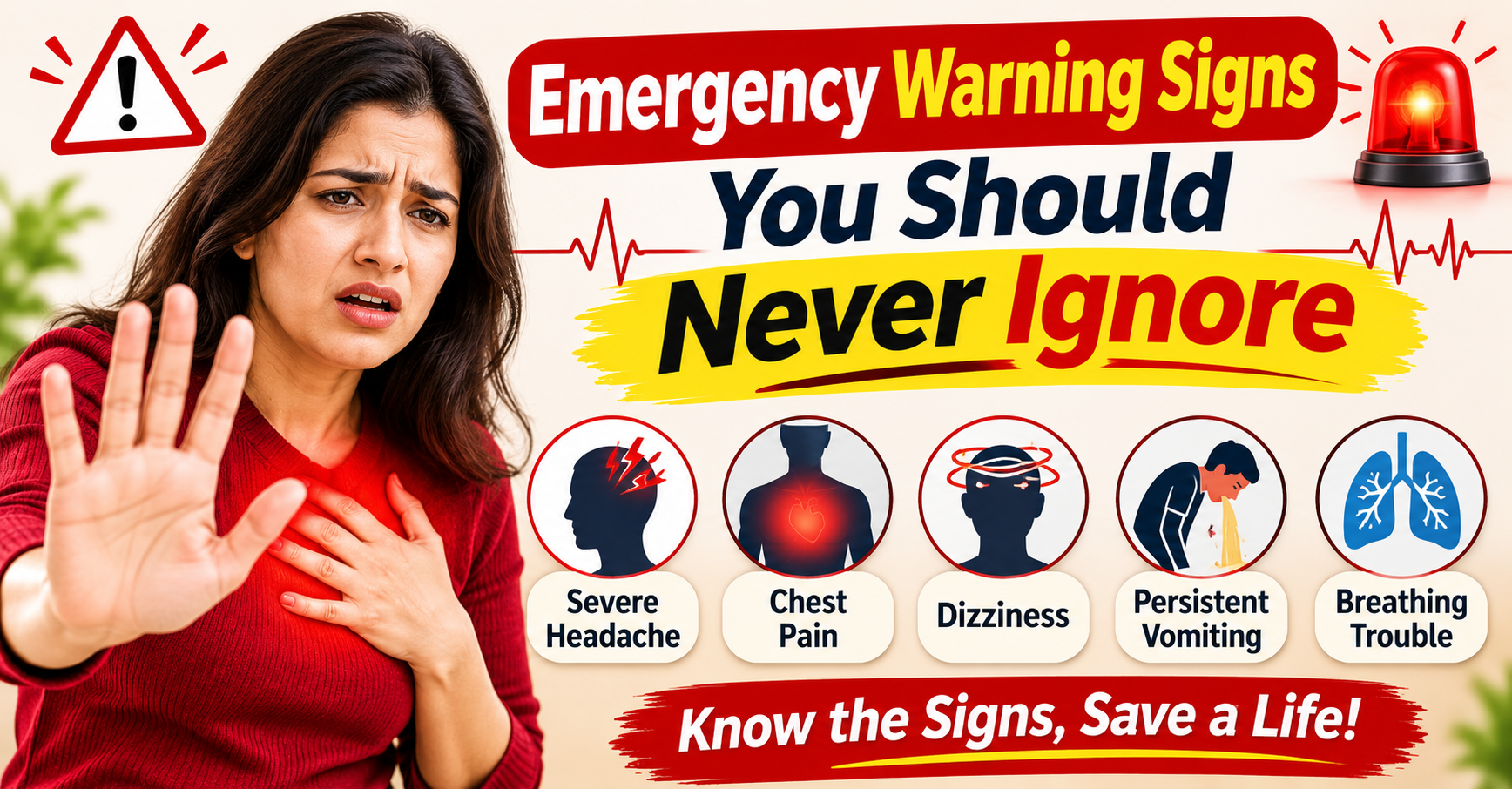
Medical emergencies can happen unexpectedly, sometimes without much warning. A symptom that may initially seem minor can occasionally indicate a serious health condition that needs immediate medical attention. Recognising these warning signs and responding quickly can make an important difference to a person's health and recovery.
Many people delay visiting a hospital because they expect symptoms to improve on their own. However, certain conditions, such as a heart attack, stroke, severe allergic reaction, or internal bleeding, require urgent medical assessment.
Knowing which symptoms should never be ignored can help you make better decisions for yourself and your family. This guide explains common emergency warning signs, when to seek medical help, and how to respond while waiting for professional assistance.
1. Sudden Chest Pain or Pressure
Sudden chest pain, tightness, squeezing, or pressure can be a warning sign of a serious heart-related problem, including a heart attack. The discomfort may spread to the arms, shoulders, back, neck, or jaw.
Some people may also experience sweating, nausea, dizziness, or shortness of breath. Heart-related emergencies do not always cause severe or dramatic chest pain, so unusual chest discomfort should not be ignored.
What to do: Seek emergency medical help immediately if you experience unexplained chest pain or pressure, particularly when it occurs with other symptoms. Do not drive yourself to the hospital.
2. Difficulty Breathing
Breathing difficulty can develop due to several conditions, including severe asthma attacks, lung infections, allergic reactions, or heart problems.
Warning signs include struggling to breathe, rapid breathing, an inability to speak in complete sentences, or bluish lips or skin. Sudden or severe breathing difficulty should always be treated as an emergency.
What to do: Call emergency services immediately. Help the person sit in a comfortable position and follow the instructions given by emergency professionals.
3. Sudden Weakness or Signs of Stroke
A stroke occurs when blood supply to part of the brain is interrupted or when bleeding occurs in the brain. It requires immediate medical attention because brain cells can be damaged quickly.
Common warning signs include:
- Sudden weakness or numbness in the face, arm, or leg, especially on one side of the body.
- Difficulty speaking or understanding speech.
- Sudden loss of balance or coordination.
- Sudden blurred vision or loss of vision.
- An unusually severe headache with no clear cause.
A simple way to remember common stroke signs is FAST:
- F – Face: One side of the face may droop.
- A – Arms: One arm may become weak or difficult to raise.
- S – Speech: Speech may become unclear or difficult.
- T – Time: Seek emergency medical help immediately.
What to do: Call emergency services immediately, note the time symptoms started, and do not wait to see whether they disappear.
4. Severe or Uncontrolled Bleeding
Heavy bleeding following an accident, injury, or wound can become life-threatening if not managed quickly. Blood loss may lead to weakness, dizziness, shock, and other serious complications.
What to do: Apply firm, continuous pressure to the wound using a clean cloth or dressing, if possible. Call emergency services for severe bleeding. Do not remove an object embedded in the wound; apply pressure around it while waiting for help.
5. Sudden Loss of Consciousness or Fainting
Fainting can occur for several reasons, including dehydration, low blood sugar, or a sudden drop in blood pressure. However, sudden loss of consciousness may also be associated with heart problems, seizures, or other serious conditions.
If someone does not regain consciousness quickly, has difficulty breathing, experiences chest pain, or has a seizure, emergency help is needed.
What to do: Check whether the person is responsive and breathing normally. Call emergency services if they are unresponsive or not breathing normally. If they are not breathing normally, begin CPR if you are trained and follow the emergency operator's instructions.
6. Severe Abdominal Pain
Mild stomach discomfort is common, but sudden, intense, or worsening abdominal pain may indicate a serious medical problem. Possible causes include appendicitis, internal bleeding, intestinal obstruction, or other abdominal conditions.
Warning signs may include severe pain, a swollen or rigid abdomen, persistent vomiting, fever, or blood in vomit or stool.
What to do: Seek urgent medical evaluation for severe or sudden abdominal pain. Do not ignore pain that is getting worse or is accompanied by other concerning symptoms.
7. Serious Head Injury
A head injury following a fall, road accident, or physical impact can sometimes cause internal bleeding or brain injury, even when there is no visible wound.
Warning signs include repeated vomiting, confusion, severe headache, unusual sleepiness, seizures, difficulty walking, or loss of consciousness.
What to do: Seek emergency medical attention if serious symptoms occur after a head injury. Avoid moving the person's head or neck unnecessarily, especially if a neck or spinal injury is possible.
8. Severe Allergic Reactions
Some allergic reactions can become life-threatening within minutes. A severe reaction, known as anaphylaxis, may occur after exposure to certain foods, medicines, insect stings, or other triggers.
Warning signs include swelling of the tongue or throat, difficulty breathing, wheezing, dizziness, fainting, or a rapidly developing reaction involving multiple parts of the body.
What to do: Call emergency services immediately. If the person has a prescribed adrenaline auto-injector, help them use it according to their emergency instructions. Do not wait for symptoms to improve.
9. Seizures
Seizures can cause uncontrolled body movements, temporary loss of awareness, unusual behaviour, or a sudden change in responsiveness. A first-time seizure should be medically evaluated.
Emergency help is particularly important if a seizure lasts more than five minutes, another seizure begins before the person recovers, the person has difficulty breathing, or an injury occurs.
What to do: Move nearby dangerous objects away, protect the person's head with something soft, and note how long the seizure lasts. Do not hold the person down or put anything in their mouth.
10. High Fever With Serious Symptoms
Fever is often associated with infections, but a very high temperature accompanied by serious symptoms may require urgent medical attention.
Warning signs include confusion, difficulty breathing, seizures, severe dehydration, a stiff neck, or unusual drowsiness. In infants, especially very young babies, fever needs prompt medical assessment.
What to do: Seek medical advice promptly when fever is accompanied by severe symptoms. Do not rely only on home remedies if the person's condition is worsening.
11. Sudden Vision Loss or Major Vision Changes
Sudden loss of vision, severe eye pain, or an abrupt change in eyesight can be associated with serious eye or neurological conditions.
These symptoms should not be dismissed as ordinary eye strain or tiredness.
What to do: Seek urgent medical assessment, particularly if vision changes happen suddenly or occur with weakness, severe headache, dizziness, or difficulty speaking.
12. Pregnancy-Related Emergency Warning Signs
Some symptoms during pregnancy require immediate medical assessment to protect the health of the mother and baby.
Important warning signs include:
- Heavy vaginal bleeding.
- Severe abdominal pain.
- Severe headache with blurred vision.
- Difficulty breathing or chest pain.
- Seizures or loss of consciousness.
- Noticeably reduced or absent fetal movement when movement is normally expected.
What to do: Contact your maternity care provider or seek emergency medical attention immediately if these symptoms occur. Do not delay care while waiting for a routine appointment.
Why Is Immediate Medical Attention Important?
In many emergencies, timely treatment can reduce the risk of complications and improve the chances of recovery. Conditions such as heart attacks, strokes, severe allergic reactions, and uncontrolled bleeding can become more dangerous when treatment is delayed.
Getting medical help early also allows healthcare professionals to identify the cause of symptoms and begin appropriate treatment.
It is always safer to seek professional advice when symptoms are sudden, severe, unusual, or rapidly worsening rather than trying to diagnose the problem at home.
What Should You Do During a Medical Emergency?
Knowing a few basic steps can help you respond calmly while professional help is on the way.
- Call emergency services: In India, dial 112 for emergency assistance. For an ambulance, 108 is also available in many states.
- Stay calm: Speak clearly and explain the symptoms, location, and condition of the person.
- Follow professional instructions: Listen carefully to the emergency operator and follow their guidance.
- Avoid unnecessary movement: Do not move someone with a possible head, neck, or spinal injury unless they are in immediate danger.
- Share medical information: If possible, provide details about existing medical conditions, allergies, and medicines.
- Do not delay: Avoid waiting for symptoms to disappear when an emergency warning sign is present.
When Should You Visit an Emergency Hospital in Jaipur?
You should seek immediate medical attention when you or someone around you experiences symptoms such as chest pain, severe breathing difficulty, signs of stroke, uncontrolled bleeding, loss of consciousness, or a serious injury.
For people living in and around Amer Road, Jaipur, knowing where to seek medical assistance can help reduce delays during an emergency.
Pawan Hospital, located on Amer Road, Jaipur, can be considered for healthcare consultation. For a suspected life-threatening emergency, contact emergency services immediately and confirm the appropriate facility for urgent care.
Conclusion
Medical emergencies can happen at any time, and recognising their warning signs is essential. Sudden chest pain, breathing difficulty, stroke symptoms, severe bleeding, loss of consciousness, and serious allergic reactions should never be ignored.
Do not wait for severe symptoms to become worse before seeking help. Acting quickly, contacting emergency services, and following professional medical advice can help protect lives.
Stay informed, take warning signs seriously, and encourage your family members to understand basic emergency response steps.
Pawan Hospital
Author