Understanding the Difference Between Primary, Secondary, and Tertiary Healthcare

Pawan Hospital
Introduction
Healthcare is not limited to visiting a doctor when you feel unwell. Modern healthcare is organised into different levels so that patients can receive the right type of medical attention according to their health needs. These levels are commonly described as primary, secondary, and tertiary healthcare.
Understanding these three levels can help you know where to seek medical care for a routine health concern, when you may need a specialist, and when advanced hospital-based treatment may be required.
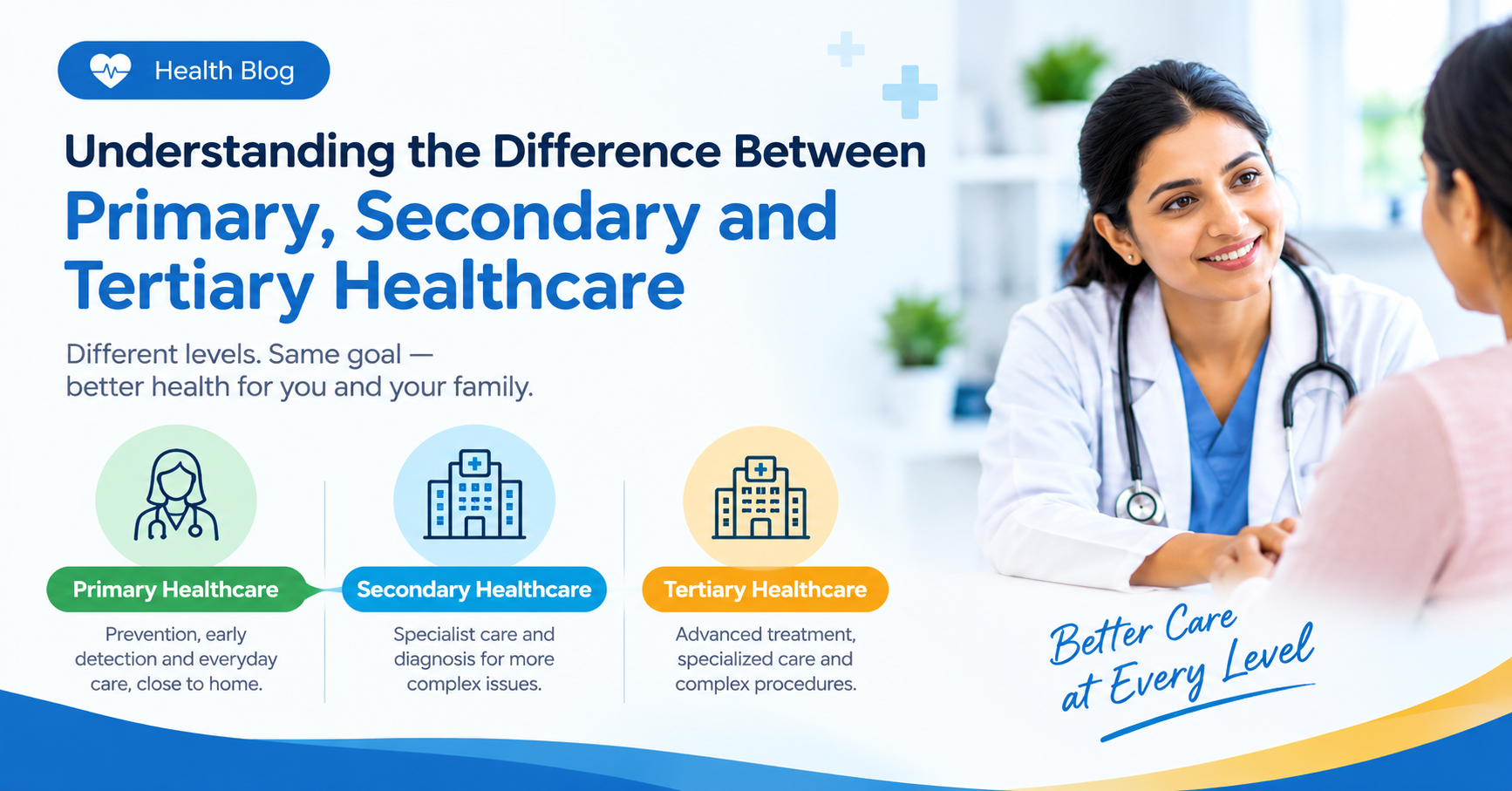
Primary healthcare generally deals with common health concerns, preventive care, regular consultations, and early diagnosis. Secondary healthcare involves specialist medical services, while tertiary healthcare focuses on complex conditions that may require advanced diagnostic procedures, specialist teams, surgery, intensive monitoring, or other specialised treatment.
For people living in Jaipur and nearby areas, knowing how these healthcare levels work can make it easier to choose the appropriate medical facility and seek treatment at the right time.
What Is Primary Healthcare?
Primary healthcare is usually the first point of contact between a patient and the healthcare system. It focuses on common illnesses, preventive healthcare, basic diagnosis, health advice, and ongoing management of many health conditions.
A person may visit a primary healthcare provider for problems such as fever, cough, common infections, minor injuries, digestive complaints, headaches, or routine health concerns. Primary care also plays an important role in monitoring conditions such as diabetes and high blood pressure.
Regular consultations at the primary-care level can help identify health problems at an early stage. When a doctor notices that a patient needs specialised investigation or treatment, the patient may then be referred to a specialist or hospital department.
Primary healthcare is therefore not only about treating minor illnesses. It also supports preventive care and helps people maintain their health through regular medical guidance.
Common Services in Primary Healthcare
Primary healthcare may include general medical consultations, preventive health advice, basic health assessments, vaccination services, routine screening, and management of common illnesses.
For people with long-term conditions, regular primary care can also help monitor symptoms, medications, blood pressure, blood sugar, and other health indicators. If a condition becomes complicated or requires specialised treatment, the patient can be directed to the appropriate specialist.
This makes primary healthcare an important foundation of the overall healthcare system.
What Is Secondary Healthcare?
Secondary healthcare refers to specialist medical care that is generally provided when a patient needs more specialised evaluation or treatment than primary care can provide.
For example, a patient experiencing persistent symptoms may be referred to a cardiologist, gynecologist, surgeon, or another specialist depending on the medical concern. Secondary healthcare can involve specialist consultation, advanced diagnostic testing, planned procedures, and hospital-based treatment.
A patient does not necessarily need to have a serious or life-threatening illness to require secondary care. Sometimes a condition simply needs expertise from a particular medical specialty.
For example, a person with persistent abdominal pain may initially consult a general physician. If further evaluation suggests that specialist assessment is needed, the patient may be referred to a gastroenterologist or surgeon.
What Services Are Included in Secondary Healthcare?
Secondary healthcare commonly includes specialist consultations, diagnostic investigations, medical procedures, and treatment provided by specialists.
Depending on the healthcare facility, services may include gynecology and obstetrics, general surgery, internal medicine, cardiology, orthopedics, or other specialties. Hospital-based departments may also provide inpatient care when a patient needs observation or treatment that cannot be managed through a routine consultation.
The exact services available vary from one hospital or healthcare facility to another.
What Is Tertiary Healthcare?
Tertiary healthcare represents a higher level of specialised medical care, generally used for complex or serious conditions that require advanced expertise, specialised equipment, or multidisciplinary treatment.
Patients may reach tertiary care through referral from primary or secondary healthcare providers. However, in emergencies, patients may also directly require hospital-based advanced care depending on their condition.
Tertiary healthcare can involve complex surgeries, advanced diagnostic procedures, intensive medical management, specialised cancer care, critical care, and treatment requiring multiple medical specialists.
The purpose of tertiary care is to provide specialised treatment for health problems that cannot be adequately managed at lower levels of care.
Primary vs Secondary vs Tertiary Healthcare
The easiest way to understand the three levels is to consider the type and complexity of care involved.
Primary healthcare is generally the first level of care. It focuses on prevention, routine consultations, common illnesses, early diagnosis, and ongoing management of many health conditions.
Secondary healthcare provides specialist evaluation and treatment. Patients may reach this level when their condition requires a particular medical specialty or hospital-based investigation and treatment.
Tertiary healthcare deals with more complex medical conditions that require advanced expertise, specialised technology, complex procedures, or coordinated care involving multiple specialists.
These levels are not completely separate. They are designed to work together so that patients can move to a more specialised level of care when medically necessary.
Why Is Primary Healthcare Important?
Primary healthcare helps people address health concerns before they become more complicated. Many health conditions can be identified through routine consultations and basic investigations.
Regular medical consultations can also help people understand their risk factors and make appropriate lifestyle changes. Conditions such as high blood pressure, diabetes, obesity, and other chronic health problems often require continuous monitoring rather than a single visit.
Primary care can therefore support both prevention and long-term health management.
It also helps reduce unnecessary delays in diagnosis. When symptoms continue or become concerning, a primary-care doctor can assess the situation and recommend further investigation or specialist consultation.
Why Is Secondary Healthcare Important?
Secondary healthcare becomes important when a patient requires specialised medical knowledge.
A general physician may identify that a patient's symptoms need further evaluation by a specialist. A gynecologist may need to assess a specific reproductive health concern, while a surgeon may evaluate a condition that could require a procedure.
Specialist care can provide more focused diagnosis and treatment based on the patient's particular medical condition.
Hospitals offering multiple departments can also make coordination between different specialties easier when a patient's condition involves more than one area of healthcare.
Why Is Tertiary Healthcare Important?
Some medical conditions are too complex to manage through routine consultations alone. Such situations may require advanced investigations, specialised procedures, surgery, intensive monitoring, or involvement from several specialists.
Tertiary healthcare provides the infrastructure and expertise required for such cases.
It is particularly relevant when patients require complex medical management or advanced hospital-based treatment. In many cases, tertiary care works closely with secondary and primary healthcare so that patients can continue receiving appropriate follow-up after their advanced treatment.
When Should You Visit a Primary Healthcare Provider?
For many common health concerns, starting with a general doctor or primary healthcare provider is appropriate. This may include symptoms such as mild fever, common infections, digestive problems, headaches, routine health concerns, or general preventive checkups.
People with chronic conditions may also need regular consultations to monitor their health and treatment.
However, symptoms that are severe, sudden, persistent, or rapidly worsening should not be ignored. Depending on the situation, immediate hospital or emergency care may be more appropriate.
When Do You Need Specialist or Secondary Care?
You may require specialist care when your symptoms are persistent, when an initial evaluation suggests a specific medical condition, or when a general doctor recommends specialist assessment.
For example, recurring symptoms, abnormal test results, pregnancy-related concerns, surgical problems, or conditions requiring specialised diagnosis may need secondary-level care.
The decision to see a specialist should depend on your symptoms and medical assessment rather than simply waiting for a condition to become severe.
When May Tertiary Care Be Required?
Tertiary care may be required when a patient has a complex medical condition that needs advanced treatment or specialised hospital facilities.
Such cases may involve complicated surgery, serious medical conditions, critical illness, or treatment requiring multiple specialists and advanced diagnostic or therapeutic facilities.
A doctor may recommend referral to a tertiary-care centre when the patient's medical needs go beyond the services available at the current healthcare level.
How Do the Three Levels Work Together?
The healthcare system works best when primary, secondary, and tertiary care are connected.
A patient may begin with a general medical consultation. If the doctor identifies a condition requiring specialist attention, the patient may move to secondary care. If the condition is particularly complex and requires advanced treatment, the patient may then be referred to tertiary care.
After treatment, the patient may return to primary or secondary care for regular follow-up and long-term monitoring.
This continuity helps patients receive appropriate care at different stages of their medical journey.
Choosing the Right Hospital for Your Healthcare Needs
Choosing a healthcare facility depends on the patient's condition, the type of treatment required, available medical departments, diagnostic facilities, emergency services, and the need for specialist care.
For routine medical concerns, a general physician may be the appropriate starting point. For specialist conditions, a hospital with relevant departments can provide more focused care. When advanced treatment is required, patients should follow their doctor's recommendation regarding referral and specialised facilities.
In Jaipur, patients looking for a hospital in Amer Road Jaipur can consider healthcare facilities based on their medical requirements and the services available.
Pawan Hospital Jaipur for Comprehensive Medical Care
Pawan Hospital is a multispecialty hospital located at 27, Govindpuri East, New Ramgarh Mode, Amer Road, Jaipur, Rajasthan 302002.
The hospital provides different types of medical services, including outpatient care, diagnostic services, inpatient care, operative services, and gynecology and obstetrics services. The hospital also provides 24-hour emergency services.
With multiple departments under one hospital, patients can receive medical consultation, diagnostic evaluation, treatment, and follow-up according to their individual healthcare requirements.
For people searching for a multispecialty hospital in Amer Road Jaipur, hospital in Jaipur, or hospital near Amer Road, understanding the available departments and medical facilities can help them make an informed healthcare decision.
Conclusion
Primary, secondary, and tertiary healthcare represent different levels of medical care, but all three are connected.
Primary healthcare focuses on prevention, routine medical care, early diagnosis, and management of common conditions. Secondary healthcare provides specialist consultation and treatment, while tertiary healthcare addresses complex medical conditions requiring advanced expertise and specialised facilities.
Knowing the difference between these levels can help patients understand where to seek care and when a referral may be necessary. Most importantly, persistent or concerning symptoms should not be ignored, and medical advice should be sought according to the individual's condition.
For patients in Jaipur, choosing a healthcare facility with appropriate medical departments, diagnostic services, emergency support, and specialist care can help ensure continuity of treatment.
Pawan Hospital
Author